Salt that isn’t there: decoding “salinity” in wine
Wine has a talent for borrowing words from the physical world and wearing them like perfume. “Saline”, “iodine”, “mineral”, “sapid”: terms that sound immediate at the tasting table, as if the glass were a seashore you can hold. Try to chase them with a ruler – or a lab – and they slip away. Yet the sensation is real: a faint sea-breeze prickle at the back of the tongue, the kind of mouthwatering snap that makes you reach for another sip.
To see how slippery the idea is, start in the least romantic setting imaginable: a sensory laboratory. No oysters, no cliffs, no sunsets. Just a plastic pipette, one millilitre of salty solution spread across the tongue in a “circular motion”, and then swallow. At the University of Adelaide’s Waite Campus in South Australia, researchers used precisely this method to measure sodium chloride (NaCl) detection and recognition thresholds in water, grape juice and wine. The “sea in the glass” reduced to 1 mL of science: it’s almost funny – and extremely clarifying.
Salt, salinity, sapidity: three words, one confusion
“Salty” is a basic taste. If there is enough free sodium, the brain calls it what it is. “Salinity”, as wine people use the word, is often broader: it may include the mouthwatering pull of high-acid whites, a chalk-dry tactile finish, or a distinctly maritime suggestion built as much by aroma as by taste. All of that can happen without analytical chemistry being able to point at the number and say: “Here. Salt. Full stop.”
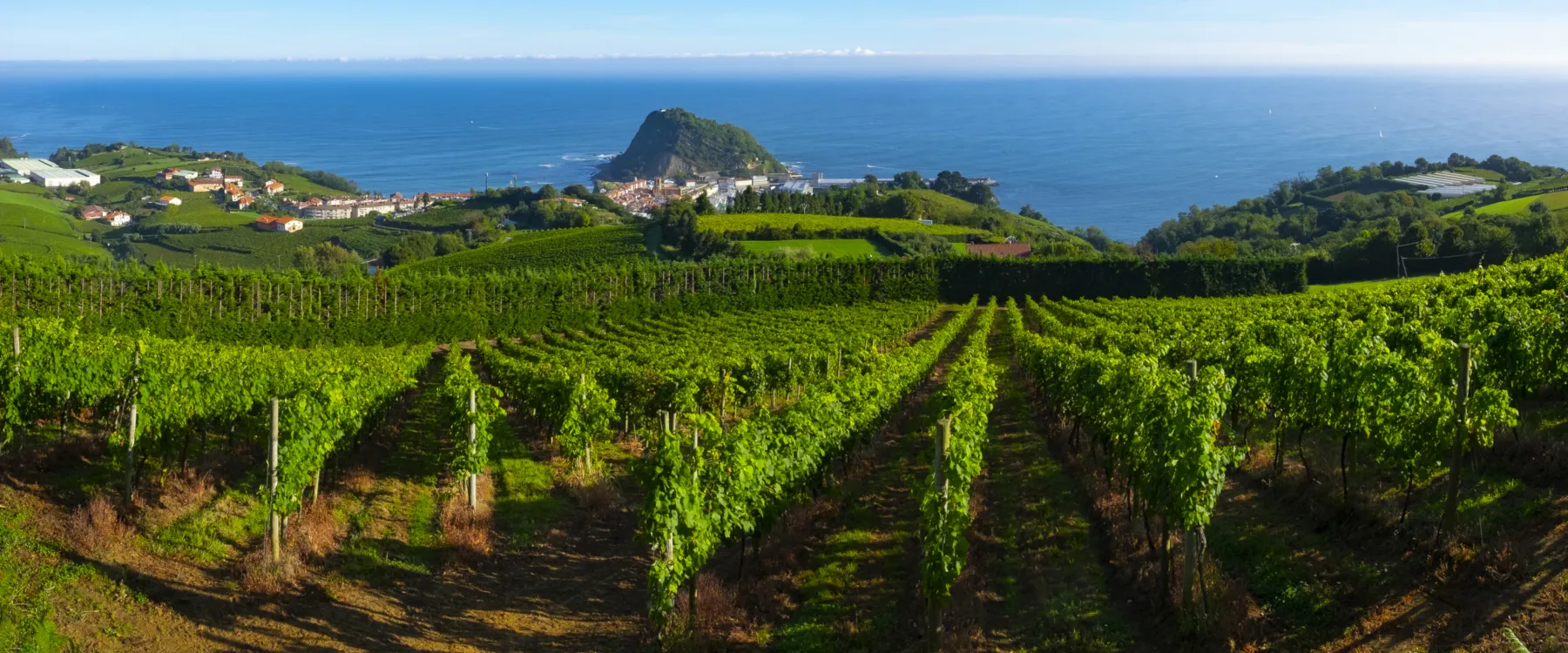
This is not because wine lacks ions. It doesn’t: sodium, chloride, sulfate and potassium are measurable. The International Organisation of Vine and Wine (OIV) notes that sodium and chloride levels “essentially depend” on geographic, geologic and climatic conditions, and that, as a rule, they remain low. The same OIV advice adds a detail that sounds written for coastal daydreams: levels can increase in vineyards near the sea, with brackish subsoils, or in arid areas irrigated with saline water. In such cases the molar Cl/Na ratio can approach 1 – a value that might suggest salt addition, yet cannot be used as a shortcut to judgement without further checks.
When salt is measurable (and how it gets there)
Australia, a natural laboratory for viticulture under pressure, offers useful baselines. In a survey of 1,214 grape juices, mean sodium was 55 mg/L, while chloride expressed as NaCl averaged 232 mg/L. In other words: numbers that are real, but nowhere near the mental picture of “seawater”. And still, technical literature keeps repeating the same warning: soil and irrigation salinity are rising in many regions, driven by drought, water quality and resource management. What makes the difference in the vineyard is often the rootstock – its capacity to “exclude” (limit uptake and/or transport) chloride and sodium.
A technical factsheet by grapevine physiologist Rob R. Walker is blunt: Vitis vinifera is classed as moderately sensitive to salinity; beyond certain soil electrical conductivity (ECe) thresholds, yields can be expected to decline. On the wine side, it highlights something that rarely makes it into the poetic talk of “salinity”: chloride in berries tends to build up far more in skins than in pulp. A red wine fermented on skins can therefore extract more chloride than a white wine made by direct pressing – a concrete mechanism rather than a metaphor.
Then there are cellar contributions. In the Adelaide study, the authors report that sodium sometimes increases from juice to wine and point to practical reasons: additives and processing aids (bentonite, for instance, can release ions), as well as the chemistry of stabilisation steps. Here salinity is not terroir – it’s technology.
Thresholds: when “bracing” becomes “salty”
And yet – this is the heart of the confusion – salt can be perceived even when values sit within legal limits. In the Australian threshold work, the median NaCl detection threshold in wine was around 0.30–0.31 g/L (300–310 mg/L). Median recognition thresholds (the point at which tasters correctly identify the sensation as salty) were higher: 1.77–2.05 g/L, depending on wine type. Two things follow.
First: “definitely salty” requires substantial NaCl. Second: what people casually call “saline” may sit below explicit salt recognition because perceptions in wine interact – they stack, mask and amplify. The same study discusses how sugars and acids can shift NaCl thresholds, and notes a notable exception: tartaric acid tends to lower the NaCl threshold. In a taut, high-acid wine, the idea of “salt” can therefore surface sooner.
When salt isn’t the driver (but it feels that way)
This is where the false friends step in – sensations that dress up as salinity.
One is acidity-driven salivation. It is the “lemon on fish” effect: you are not eating salt, but the brain, trained by food to expect salt and acid to work together, happily blends them. In wine, the same shortcut includes pH, perceived tension and the clean snap of the finish.
A second false friend is older and more technical. Émile Peynaud, one of the founding educators of modern wine tasting, is cited by Baroň and Fiala for his description of succinic acid: “salty”, slightly bitter and markedly drying. Succinic acid is a natural product of fermentation, present in wine at relatively high concentrations – roughly 0.5–1.5 g/L. If you have ever met a white wine that feels “dry” in a tactile sense – powdery, mouth-coating, almost chalky – and you felt tempted to call it “sapid”, you may have been talking about succinic acid too.
Third: aroma. A study on Chablis minerality found that, in orthonasal evaluation (nose only), wines judged more “mineral” showed higher methanethiol – a volatile linked to shellfish-like notes. From there the brain does the rest: a whiff that hints at shells, a taut palate, and the story becomes “salinity”.
Fourth: bitterness and reductive nuances. Work on the perception of minerality shows experts linking the descriptor to acidity and “wet stone” impressions – and, under certain conditions, to reductive aromas and bitterness. This is one reason “saline” and “mineral” often end up in the same drawer: not because limestone dissolves into flavour, but because the sensory combination points in a similar direction.
A useful word – if we handle it carefully
At this point someone will say: fine, but I can taste it. And they are right. The goal is not to ban the word “salinity”. It is to use it knowing that, in wine, it can mean at least three different things.
It can be measurable salt (elevated Na and Cl from brackish soils, saline irrigation, rootstock choices, skin extraction, even cellar inputs). It can be a sensory shorthand for acidity and mouthwatering tension. Or it can be an aromatic illusion, when the nose stages shells, seaweed or flint and the palate believes it.
The most honest way to finish is to return to the pipette. There, with 1 mL of NaCl, “salty” is simple. In the glass, “salinity” becomes a shared story – chemistry, food culture and olfactory memory braided together. The sea in wine does exist, but it is often not a sea of salt: it is a sea of associations. Next time someone tells you “this is saline”, instead of answering yes or no, ask the better question: saline in what way?