When the wind tastes of grapefruit: Marlborough and the Sauvignon Blanc that rewrote global tastes
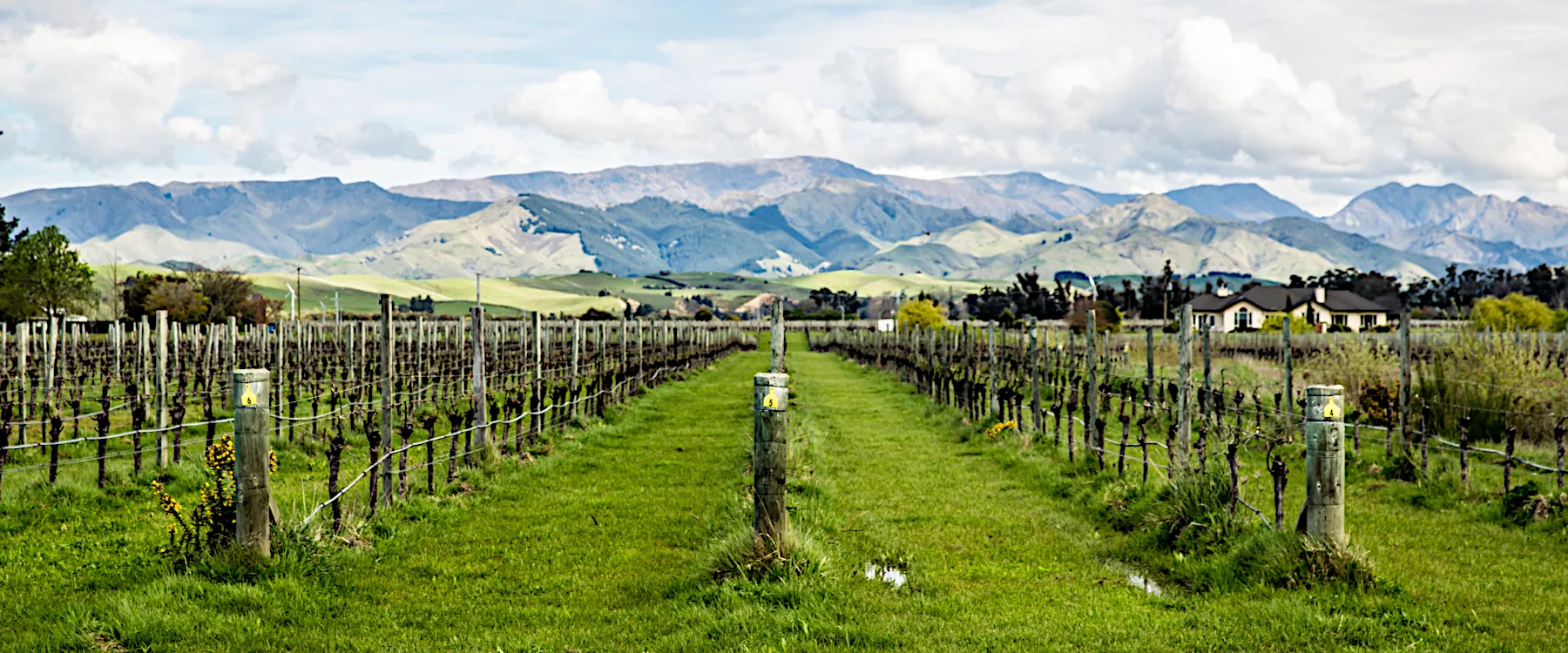
In Marlborough, light arrives early and behaves as if it owns the place. It skims across pale river stones, runs straight down perfectly ordered vine rows, then abruptly falls into the shadow of the surrounding ranges. Up here at the top of New Zealand’s South Island, the air possesses a distinct clarity: maritime coolness from Cook Strait, sun that seems to last longer than expected, and a landscape that turns viticulture into geometry.
If you’ve ever opened a bottle labelled Marlborough Sauvignon Blanc and found an immediate burst of lime, crushed leaf and passionfruit — a vividness that feels almost too intense — that “too much” is part of the plot. Marlborough didn’t just make a successful dry white. It created a global shorthand: a style that taught the market what to expect from two words on a label.
24 August 1973: planting against received wisdom
Industries don’t always pivot on grand speeches; sometimes it’s a quiet memo. In July 1972, Marlborough County Council livestock instructor S.G.C. Newdick wrote that, given the existing glut of grapes, there was no likelihood of vineyards starting up in Marlborough “in the foreseeable future”. A year later, Montana planted anyway — and did so publicly. On 24 August 1973, in front of local media, politicians and business leaders, Marlborough’s modern wine story effectively launched as a civic event.
The name most often linked to that early push is Frank Yukich of Montana Wines, who argued against the prevailing assumption that the South Island was simply “too cold”. In historical accounts, Yukich’s confidence reads like prophecy: wines from here would become world-famous. The point is not the bravado; it’s the commitment behind it. The timeline moves quickly. In 1975, some early plantings proved ill-suited to cool nights and dry summers, and parcels were replanted with Sauvignon Blanc and Pinot Noir. By 1979, the first commercial Marlborough Sauvignon Blanc had been released. In a handful of vintages, an agronomic decision turned into an exportable language.
Three valleys, three accents: Wairau, Southern Valleys, Awatere
“Marlborough” is convenient, but incomplete. The region is a set of subregions with distinct personalities: Wairau Valley, the Southern Valleys, and Awatere. Wairau is the broad, gravelly heartland — river flats and alluvial fans, viticulture drawn with ruler-straight precision. The Wairau River runs roughly 170 km from western mountains to the sea; in te reo Māori, Wairau means “many waters”. Local lore even records a poetic nickname: “Kei puta te Wairau” — “the place with the hole in the cloud”.
Numbers keep the romance honest. Marlborough Wine reports averages of around 2,513 sunshine hours and 635 mm rainfall per year. That is to say, roughly the same rainfall as the Loire Valley, but with the sunlight of the French Riviera, within a maritime climate that still carries a summer diurnal range of about 11 °C. Warm days, cooler nights: slower ripening, preserved acidity, sharper aromatic definition. This is the climatic paradox that underpins the region’s signature immediacy.
Soils do the rest. In the Southern Valleys — Brancott, Omaka, Fairhall, Waihopai — higher clay content is often found compared with Wairau’s alluvial gravels. Awatere, more exposed and frequently wind-driven, is commonly associated with a tauter profile and a savoury edge. Not rules, but reasons to stop treating “Marlborough Sauvignon” as a single flavour.
A scent that gets studied
Once a wine becomes instantly recognisable, someone will try to explain it in a lab. Research on New Zealand Sauvignon Blanc frequently points to a combination of volatile thiols (notably 3MH, 3MHA, 4MMP) and methoxypyrazines — compounds associated, broadly speaking, with that distinctive overlap of “green” and “tropical”: grapefruit zest, boxwood, capsicum, passionfruit. Marlborough’s real achievement isn’t merely making a good Sauvignon Blanc. It’s making one that can be sold in two commercial adjectives — crisp and aromatic — and then consistently delivers on that promise at scale. The balance is delicate: distinctive without sliding into self-parody.
Cloudy Bay: the label as a lever
If a wine truly shifts a market, there’s usually a catalytic moment. For Marlborough, that moment often comes with a name: Cloudy Bay. David Hohnen and winemaker Kevin Judd built the project in steps: in 1984 they vinified Marlborough fruit in Gisborne; in 1985 the first Cloudy Bay Sauvignon Blanc was made; in 1986 London became the stage, and demand ignited. One detail matters because it captures a mindset. To crack Britain, Hohnen also thought about the label: on the front, simply “Cloudy Bay” and “Sauvignon Blanc”. No decorative storytelling. It was a way of denying prejudice its foothold, forcing the glass to do the persuading. Even the name carries history. Cloudy Bay is a real bay, named by James Cook in 1770; since 2014, its official name has been Te Koko-o-Kupe / Cloudy Bay, linking to the Māori explorer Kupe. A mainstream bottle that quietly holds the braid of exploration, language and place.
When statistics become style
oday, aroma has a numerical twin. Sauvignon Blanc accounts for 71% of national production and 85% of all New Zealand wine exported. That’s “flagship variety” in its most literal form: not because it’s the only story, but because it finances the ecosystem. And the ecosystem is substantial. Exports reached NZ$2.1 billion (approximately 1 billion euros) in the year ending June 2024, with the United States alone accounting for over one third of the total.
Marlborough is the engine room. The region reports over 30,000 producing hectares — around 72% of New Zealand’s producing vineyard area. If New Zealand wine has an accent, it often sounds like Blenheim. The UK remains Marlborough’s long-running proving ground. Trade reporting places New Zealand as a leading country-of-origin in the still white category, with an average bottle price above the market average. This signals that consumers are not merely buying familiarity, but paying for it.
Sustainability as infrastructure
There’s another, less romantic reason Marlborough could grow without collapsing under its own success: industry infrastructure. Sustainable Winegrowing New Zealand (SWNZ) began in 1995 as a nationwide certification programme. Today, 98% of New Zealand’s producing vineyard area is SWNZ certified. That’s where the idea of a “pure, faraway land” stops being postcard and becomes protocol: traceability, consistency, reputation. To change the global white-wine market, Marlborough Sauvignon Blanc also had to carry scale.
What next? Nuance over photocopy
Every success brings a risk: once a style becomes this recognisable, the temptation is to replicate it until it empties out. Marlborough already has antidotes — subregions that matter, soils that shift, producers experimenting with approaches. The question isn’t whether Marlborough Sauvignon Blanc is still “fashionable”. It’s subtler: how much complexity are we willing to look for inside a wine the market has made familiar? The next leap may not be a new aroma, but a sharper focus on differences — and the confidence to make them matter — even when everything feels instantly recognisable. Because in Marlborough the wind really can taste of citrus. It just never blows in quite the same way twice.
In Marlborough, light arrives early and behaves as if it owns the place. It skims across pale river stones, runs straight down perfectly ordered vine rows, then abruptly falls into the shadow of the surrounding ranges. Up here at the top of New Zealand’s South Island, the air possesses a distinct clarity: maritime coolness from Cook Strait, sun that seems to last longer than expected, and a landscape that turns viticulture into geometry.
If you’ve ever opened a bottle labelled Marlborough Sauvignon Blanc and found an immediate burst of lime, crushed leaf and passionfruit — a vividness that feels almost too intense — that “too much” is part of the plot. Marlborough didn’t just make a successful dry white. It created a global shorthand: a style that taught the market what to expect from two words on a label.
24 August 1973: planting against received wisdom Industries don’t always pivot on grand speeches; sometimes it’s a quiet memo. In July 1972, Marlborough County Council livestock instructor S.G.C. Newdick wrote that, given the existing glut of grapes, there was no likelihood of vineyards starting up in Marlborough “in the foreseeable future”. A year later, Montana planted anyway — and did so publicly. On 24 August 1973, in front of local media, politicians and business leaders, Marlborough’s modern wine story effectively launched as a civic event.
The name most often linked to that early push is Frank Yukich of Montana Wines, who argued against the prevailing assumption that the South Island was simply “too cold”. In historical accounts, Yukich’s confidence reads like prophecy: wines from here would become world-famous. The point is not the bravado; it’s the commitment behind it. The timeline moves quickly. In 1975, some early plantings proved ill-suited to cool nights and dry summers, and parcels were replanted with Sauvignon Blanc and Pinot Noir. By 1979, the first commercial Marlborough Sauvignon Blanc had been released. In a handful of vintages, an agronomic decision turned into an exportable language.
Three valleys, three accents: Wairau, Southern Valleys, Awatere “Marlborough” is convenient, but incomplete. The region is a set of subregions with distinct personalities: Wairau Valley, the Southern Valleys, and Awatere. Wairau is the broad, gravelly heartland — river flats and alluvial fans, viticulture drawn with ruler-straight precision. The Wairau River runs roughly 170 km from western mountains to the sea; in te reo Māori, Wairau means “many waters”. Local lore even records a poetic nickname: “Kei puta te Wairau” — “the place with the hole in the cloud”.
Numbers keep the romance honest. Marlborough Wine reports averages of around 2,513 sunshine hours and 635 mm rainfall per year. That is to say, roughly the same rainfall as the Loire Valley, but with the sunlight of the French Riviera, within a maritime climate that still carries a summer diurnal range of about 11 °C. Warm days, cooler nights: slower ripening, preserved acidity, sharper aromatic definition. This is the climatic paradox that underpins the region’s signature immediacy.
Soils do the rest. In the Southern Valleys — Brancott, Omaka, Fairhall, Waihopai — higher clay content is often found compared with Wairau’s alluvial gravels. Awatere, more exposed and frequently wind-driven, is commonly associated with a tauter profile and a savoury edge. Not rules, but reasons to stop treating “Marlborough Sauvignon” as a single flavour.
A scent that gets studied Once a wine becomes instantly recognisable, someone will try to explain it in a lab. Research on New Zealand Sauvignon Blanc frequently points to a combination of volatile thiols (notably 3MH, 3MHA, 4MMP) and methoxypyrazines — compounds associated, broadly speaking, with that distinctive overlap of “green” and “tropical”: grapefruit zest, boxwood, capsicum, passionfruit. Marlborough’s real achievement isn’t merely making a good Sauvignon Blanc. It’s making one that can be sold in two commercial adjectives — crisp and aromatic — and then consistently delivers on that promise at scale. The balance is delicate: distinctive without sliding into self-parody.
Cloudy Bay: the label as a lever If a wine truly shifts a market, there’s usually a catalytic moment. For Marlborough, that moment often comes with a name: Cloudy Bay. David Hohnen and winemaker Kevin Judd built the project in steps: in 1984 they vinified Marlborough fruit in Gisborne; in 1985 the first Cloudy Bay Sauvignon Blanc was made; in 1986 London became the stage, and demand ignited. One detail matters because it captures a mindset. To crack Britain, Hohnen also thought about the label: on the front, simply “Cloudy Bay” and “Sauvignon Blanc”. No decorative storytelling. It was a way of denying prejudice its foothold, forcing the glass to do the persuading. Even the name carries history. Cloudy Bay is a real bay, named by James Cook in 1770; since 2014, its official name has been Te Koko-o-Kupe / Cloudy Bay, linking to the Māori explorer Kupe. A mainstream bottle that quietly holds the braid of exploration, language and place.
When statistics become style Today, aroma has a numerical twin. Sauvignon Blanc accounts for 71% of national production and 85% of all New Zealand wine exported. That’s “flagship variety” in its most literal form: not because it’s the only story, but because it finances the ecosystem. And the ecosystem is substantial. Exports reached NZ$2.1 billion (approximately 1 billion euros) in the year ending June 2024, with the United States alone accounting for over one third of the total.
Marlborough is the engine room. The region reports over 30,000 producing hectares — around 72% of New Zealand’s producing vineyard area. If New Zealand wine has an accent, it often sounds like Blenheim. The UK remains Marlborough’s long-running proving ground. Trade reporting places New Zealand as a leading country-of-origin in the still white category, with an average bottle price above the market average. This signals that consumers are not merely buying familiarity, but paying for it.
Sustainability as infrastructure There’s another, less romantic reason Marlborough could grow without collapsing under its own success: industry infrastructure. Sustainable Winegrowing New Zealand (SWNZ) began in 1995 as a nationwide certification programme. Today, 98% of New Zealand’s producing vineyard area is SWNZ certified. That’s where the idea of a “pure, faraway land” stops being postcard and becomes protocol: traceability, consistency, reputation. To change the global white-wine market, Marlborough Sauvignon Blanc also had to carry scale.
What next? Nuance over photocopy Every success brings a risk: once a style becomes this recognisable, the temptation is to replicate it until it empties out. Marlborough already has antidotes — subregions that matter, soils that shift, producers experimenting with approaches. The question isn’t whether Marlborough Sauvignon Blanc is still “fashionable”. It’s subtler: how much complexity are we willing to look for inside a wine the market has made familiar? The next leap may not be a new aroma, but a sharper focus on differences — and the confidence to make them matter — even when everything feels instantly recognisable. Because in Marlborough the wind really can taste of citrus. It just never blows in quite the same way twice.
In Marlborough, light arrives early and behaves as if it owns the place. It skims across pale river stones, runs straight down perfectly ordered vine rows, then abruptly falls into the shadow of the surrounding ranges. Up here at the top of New Zealand’s South Island, the air possesses a distinct clarity: maritime coolness from Cook Strait, sun that seems to last longer than expected, and a landscape that turns viticulture into geometry.
If you’ve ever opened a bottle labelled Marlborough Sauvignon Blanc and found an immediate burst of lime, crushed leaf and passionfruit — a vividness that feels almost too intense — that “too much” is part of the plot. Marlborough didn’t just make a successful dry white. It created a global shorthand: a style that taught the market what to expect from two words on a label.
24 August 1973: planting against received wisdom Industries don’t always pivot on grand speeches; sometimes it’s a quiet memo. In July 1972, Marlborough County Council livestock instructor S.G.C. Newdick wrote that, given the existing glut of grapes, there was no likelihood of vineyards starting up in Marlborough “in the foreseeable future”. A year later, Montana planted anyway — and did so publicly. On 24 August 1973, in front of local media, politicians and business leaders, Marlborough’s modern wine story effectively launched as a civic event.
The name most often linked to that early push is Frank Yukich of Montana Wines, who argued against the prevailing assumption that the South Island was simply “too cold”. In historical accounts, Yukich’s confidence reads like prophecy: wines from here would become world-famous. The point is not the bravado; it’s the commitment behind it. The timeline moves quickly. In 1975, some early plantings proved ill-suited to cool nights and dry summers, and parcels were replanted with Sauvignon Blanc and Pinot Noir. By 1979, the first commercial Marlborough Sauvignon Blanc had been released. In a handful of vintages, an agronomic decision turned into an exportable language.
Three valleys, three accents: Wairau, Southern Valleys, Awatere “Marlborough” is convenient, but incomplete. The region is a set of subregions with distinct personalities: Wairau Valley, the Southern Valleys, and Awatere. Wairau is the broad, gravelly heartland — river flats and alluvial fans, viticulture drawn with ruler-straight precision. The Wairau River runs roughly 170 km from western mountains to the sea; in te reo Māori, Wairau means “many waters”. Local lore even records a poetic nickname: “Kei puta te Wairau” — “the place with the hole in the cloud”.
Numbers keep the romance honest. Marlborough Wine reports averages of around 2,513 sunshine hours and 635 mm rainfall per year. That is to say, roughly the same rainfall as the Loire Valley, but with the sunlight of the French Riviera, within a maritime climate that still carries a summer diurnal range of about 11 °C. Warm days, cooler nights: slower ripening, preserved acidity, sharper aromatic definition. This is the climatic paradox that underpins the region’s signature immediacy.
Soils do the rest. In the Southern Valleys — Brancott, Omaka, Fairhall, Waihopai — higher clay content is often found compared with Wairau’s alluvial gravels. Awatere, more exposed and frequently wind-driven, is commonly associated with a tauter profile and a savoury edge. Not rules, but reasons to stop treating “Marlborough Sauvignon” as a single flavour.
A scent that gets studied Once a wine becomes instantly recognisable, someone will try to explain it in a lab. Research on New Zealand Sauvignon Blanc frequently points to a combination of volatile thiols (notably 3MH, 3MHA, 4MMP) and methoxypyrazines — compounds associated, broadly speaking, with that distinctive overlap of “green” and “tropical”: grapefruit zest, boxwood, capsicum, passionfruit. Marlborough’s real achievement isn’t merely making a good Sauvignon Blanc. It’s making one that can be sold in two commercial adjectives — crisp and aromatic — and then consistently delivers on that promise at scale. The balance is delicate: distinctive without sliding into self-parody.
Cloudy Bay: the label as a lever If a wine truly shifts a market, there’s usually a catalytic moment. For Marlborough, that moment often comes with a name: Cloudy Bay. David Hohnen and winemaker Kevin Judd built the project in steps: in 1984 they vinified Marlborough fruit in Gisborne; in 1985 the first Cloudy Bay Sauvignon Blanc was made; in 1986 London became the stage, and demand ignited. One detail matters because it captures a mindset. To crack Britain, Hohnen also thought about the label: on the front, simply “Cloudy Bay” and “Sauvignon Blanc”. No decorative storytelling. It was a way of denying prejudice its foothold, forcing the glass to do the persuading. Even the name carries history. Cloudy Bay is a real bay, named by James Cook in 1770; since 2014, its official name has been Te Koko-o-Kupe / Cloudy Bay, linking to the Māori explorer Kupe. A mainstream bottle that quietly holds the braid of exploration, language and place.
When statistics become style Today, aroma has a numerical twin. Sauvignon Blanc accounts for 71% of national production and 85% of all New Zealand wine exported. That’s “flagship variety” in its most literal form: not because it’s the only story, but because it finances the ecosystem. And the ecosystem is substantial. Exports reached NZ$2.1 billion (approximately 1 billion euros) in the year ending June 2024, with the United States alone accounting for over one third of the total.
Marlborough is the engine room. The region reports over 30,000 producing hectares — around 72% of New Zealand’s producing vineyard area. If New Zealand wine has an accent, it often sounds like Blenheim. The UK remains Marlborough’s long-running proving ground. Trade reporting places New Zealand as a leading country-of-origin in the still white category, with an average bottle price above the market average. This signals that consumers are not merely buying familiarity, but paying for it.
Sustainability as infrastructure There’s another, less romantic reason Marlborough could grow without collapsing under its own success: industry infrastructure. Sustainable Winegrowing New Zealand (SWNZ) began in 1995 as a nationwide certification programme. Today, 98% of New Zealand’s producing vineyard area is SWNZ certified. That’s where the idea of a “pure, faraway land” stops being postcard and becomes protocol: traceability, consistency, reputation. To change the global white-wine market, Marlborough Sauvignon Blanc also had to carry scale.
What next? Nuance over photocopy Every success brings a risk: once a style becomes this recognisable, the temptation is to replicate it until it empties out. Marlborough already has antidotes — subregions that matter, soils that shift, producers experimenting with approaches. The question isn’t whether Marlborough Sauvignon Blanc is still “fashionable”. It’s subtler: how much complexity are we willing to look for inside a wine the market has made familiar? The next leap may not be a new aroma, but a sharper focus on differences — and the confidence to make them matter — even when everything feels instantly recognisable. Because in Marlborough the wind really can taste of citrus. It just never blows in quite the same way twice.
In Marlborough, light arrives early and behaves as if it owns the place. It skims across pale river stones, runs straight down perfectly ordered vine rows, then abruptly falls into the shadow of the surrounding ranges. Up here at the top of New Zealand’s South Island, the air possesses a distinct clarity: maritime coolness from Cook Strait, sun that seems to last longer than expected, and a landscape that turns viticulture into geometry.
If you’ve ever opened a bottle labelled Marlborough Sauvignon Blanc and found an immediate burst of lime, crushed leaf and passionfruit — a vividness that feels almost too intense — that “too much” is part of the plot. Marlborough didn’t just make a successful dry white. It created a global shorthand: a style that taught the market what to expect from two words on a label.
24 August 1973: planting against received wisdom Industries don’t always pivot on grand speeches; sometimes it’s a quiet memo. In July 1972, Marlborough County Council livestock instructor S.G.C. Newdick wrote that, given the existing glut of grapes, there was no likelihood of vineyards starting up in Marlborough “in the foreseeable future”. A year later, Montana planted anyway — and did so publicly. On 24 August 1973, in front of local media, politicians and business leaders, Marlborough’s modern wine story effectively launched as a civic event.
The name most often linked to that early push is Frank Yukich of Montana Wines, who argued against the prevailing assumption that the South Island was simply “too cold”. In historical accounts, Yukich’s confidence reads like prophecy: wines from here would become world-famous. The point is not the bravado; it’s the commitment behind it. The timeline moves quickly. In 1975, some early plantings proved ill-suited to cool nights and dry summers, and parcels were replanted with Sauvignon Blanc and Pinot Noir. By 1979, the first commercial Marlborough Sauvignon Blanc had been released. In a handful of vintages, an agronomic decision turned into an exportable language.
Three valleys, three accents: Wairau, Southern Valleys, Awatere “Marlborough” is convenient, but incomplete. The region is a set of subregions with distinct personalities: Wairau Valley, the Southern Valleys, and Awatere. Wairau is the broad, gravelly heartland — river flats and alluvial fans, viticulture drawn with ruler-straight precision. The Wairau River runs roughly 170 km from western mountains to the sea; in te reo Māori, Wairau means “many waters”. Local lore even records a poetic nickname: “Kei puta te Wairau” — “the place with the hole in the cloud”.
Numbers keep the romance honest. Marlborough Wine reports averages of around 2,513 sunshine hours and 635 mm rainfall per year. That is to say, roughly the same rainfall as the Loire Valley, but with the sunlight of the French Riviera, within a maritime climate that still carries a summer diurnal range of about 11 °C. Warm days, cooler nights: slower ripening, preserved acidity, sharper aromatic definition. This is the climatic paradox that underpins the region’s signature immediacy.
Soils do the rest. In the Southern Valleys — Brancott, Omaka, Fairhall, Waihopai — higher clay content is often found compared with Wairau’s alluvial gravels. Awatere, more exposed and frequently wind-driven, is commonly associated with a tauter profile and a savoury edge. Not rules, but reasons to stop treating “Marlborough Sauvignon” as a single flavour.
A scent that gets studied Once a wine becomes instantly recognisable, someone will try to explain it in a lab. Research on New Zealand Sauvignon Blanc frequently points to a combination of volatile thiols (notably 3MH, 3MHA, 4MMP) and methoxypyrazines — compounds associated, broadly speaking, with that distinctive overlap of “green” and “tropical”: grapefruit zest, boxwood, capsicum, passionfruit. Marlborough’s real achievement isn’t merely making a good Sauvignon Blanc. It’s making one that can be sold in two commercial adjectives — crisp and aromatic — and then consistently delivers on that promise at scale. The balance is delicate: distinctive without sliding into self-parody.
Cloudy Bay: the label as a lever If a wine truly shifts a market, there’s usually a catalytic moment. For Marlborough, that moment often comes with a name: Cloudy Bay. David Hohnen and winemaker Kevin Judd built the project in steps: in 1984 they vinified Marlborough fruit in Gisborne; in 1985 the first Cloudy Bay Sauvignon Blanc was made; in 1986 London became the stage, and demand ignited. One detail matters because it captures a mindset. To crack Britain, Hohnen also thought about the label: on the front, simply “Cloudy Bay” and “Sauvignon Blanc”. No decorative storytelling. It was a way of denying prejudice its foothold, forcing the glass to do the persuading. Even the name carries history. Cloudy Bay is a real bay, named by James Cook in 1770; since 2014, its official name has been Te Koko-o-Kupe / Cloudy Bay, linking to the Māori explorer Kupe. A mainstream bottle that quietly holds the braid of exploration, language and place.
When statistics become style Today, aroma has a numerical twin. Sauvignon Blanc accounts for 71% of national production and 85% of all New Zealand wine exported. That’s “flagship variety” in its most literal form: not because it’s the only story, but because it finances the ecosystem. And the ecosystem is substantial. Exports reached NZ$2.1 billion (approximately 1 billion euros) in the year ending June 2024, with the United States alone accounting for over one third of the total.
Marlborough is the engine room. The region reports over 30,000 producing hectares — around 72% of New Zealand’s producing vineyard area. If New Zealand wine has an accent, it often sounds like Blenheim. The UK remains Marlborough’s long-running proving ground. Trade reporting places New Zealand as a leading country-of-origin in the still white category, with an average bottle price above the market average. This signals that consumers are not merely buying familiarity, but paying for it.
Sustainability as infrastructure There’s another, less romantic reason Marlborough could grow without collapsing under its own success: industry infrastructure. Sustainable Winegrowing New Zealand (SWNZ) began in 1995 as a nationwide certification programme. Today, 98% of New Zealand’s producing vineyard area is SWNZ certified. That’s where the idea of a “pure, faraway land” stops being postcard and becomes protocol: traceability, consistency, reputation. To change the global white-wine market, Marlborough Sauvignon Blanc also had to carry scale.
What next? Nuance over photocopy Every success brings a risk: once a style becomes this recognisable, the temptation is to replicate it until it empties out. Marlborough already has antidotes — subregions that matter, soils that shift, producers experimenting with approaches. The question isn’t whether Marlborough Sauvignon Blanc is still “fashionable”. It’s subtler: how much complexity are we willing to look for inside a wine the market has made familiar? The next leap may not be a new aroma, but a sharper focus on differences — and the confidence to make them matter — even when everything feels instantly recognisable. Because in Marlborough the wind really can taste of citrus. It just never blows in quite the same way twice.
In Marlborough, light arrives early and behaves as if it owns the place. It skims across pale river stones, runs straight down perfectly ordered vine rows, then abruptly falls into the shadow of the surrounding ranges. Up here at the top of New Zealand’s South Island, the air possesses a distinct clarity: maritime coolness from Cook Strait, sun that seems to last longer than expected, and a landscape that turns viticulture into geometry.
If you’ve ever opened a bottle labelled Marlborough Sauvignon Blanc and found an immediate burst of lime, crushed leaf and passionfruit — a vividness that feels almost too intense — that “too much” is part of the plot. Marlborough didn’t just make a successful dry white. It created a global shorthand: a style that taught the market what to expect from two words on a label.
24 August 1973: planting against received wisdom Industries don’t always pivot on grand speeches; sometimes it’s a quiet memo. In July 1972, Marlborough County Council livestock instructor S.G.C. Newdick wrote that, given the existing glut of grapes, there was no likelihood of vineyards starting up in Marlborough “in the foreseeable future”. A year later, Montana planted anyway — and did so publicly. On 24 August 1973, in front of local media, politicians and business leaders, Marlborough’s modern wine story effectively launched as a civic event.
The name most often linked to that early push is Frank Yukich of Montana Wines, who argued against the prevailing assumption that the South Island was simply “too cold”. In historical accounts, Yukich’s confidence reads like prophecy: wines from here would become world-famous. The point is not the bravado; it’s the commitment behind it. The timeline moves quickly. In 1975, some early plantings proved ill-suited to cool nights and dry summers, and parcels were replanted with Sauvignon Blanc and Pinot Noir. By 1979, the first commercial Marlborough Sauvignon Blanc had been released. In a handful of vintages, an agronomic decision turned into an exportable language.
Three valleys, three accents: Wairau, Southern Valleys, Awatere “Marlborough” is convenient, but incomplete. The region is a set of subregions with distinct personalities: Wairau Valley, the Southern Valleys, and Awatere. Wairau is the broad, gravelly heartland — river flats and alluvial fans, viticulture drawn with ruler-straight precision. The Wairau River runs roughly 170 km from western mountains to the sea; in te reo Māori, Wairau means “many waters”. Local lore even records a poetic nickname: “Kei puta te Wairau” — “the place with the hole in the cloud”.
Numbers keep the romance honest. Marlborough Wine reports averages of around 2,513 sunshine hours and 635 mm rainfall per year. That is to say, roughly the same rainfall as the Loire Valley, but with the sunlight of the French Riviera, within a maritime climate that still carries a summer diurnal range of about 11 °C. Warm days, cooler nights: slower ripening, preserved acidity, sharper aromatic definition. This is the climatic paradox that underpins the region’s signature immediacy.
Soils do the rest. In the Southern Valleys — Brancott, Omaka, Fairhall, Waihopai — higher clay content is often found compared with Wairau’s alluvial gravels. Awatere, more exposed and frequently wind-driven, is commonly associated with a tauter profile and a savoury edge. Not rules, but reasons to stop treating “Marlborough Sauvignon” as a single flavour.
A scent that gets studied Once a wine becomes instantly recognisable, someone will try to explain it in a lab. Research on New Zealand Sauvignon Blanc frequently points to a combination of volatile thiols (notably 3MH, 3MHA, 4MMP) and methoxypyrazines — compounds associated, broadly speaking, with that distinctive overlap of “green” and “tropical”: grapefruit zest, boxwood, capsicum, passionfruit. Marlborough’s real achievement isn’t merely making a good Sauvignon Blanc. It’s making one that can be sold in two commercial adjectives — crisp and aromatic — and then consistently delivers on that promise at scale. The balance is delicate: distinctive without sliding into self-parody.
Cloudy Bay: the label as a lever If a wine truly shifts a market, there’s usually a catalytic moment. For Marlborough, that moment often comes with a name: Cloudy Bay. David Hohnen and winemaker Kevin Judd built the project in steps: in 1984 they vinified Marlborough fruit in Gisborne; in 1985 the first Cloudy Bay Sauvignon Blanc was made; in 1986 London became the stage, and demand ignited. One detail matters because it captures a mindset. To crack Britain, Hohnen also thought about the label: on the front, simply “Cloudy Bay” and “Sauvignon Blanc”. No decorative storytelling. It was a way of denying prejudice its foothold, forcing the glass to do the persuading. Even the name carries history. Cloudy Bay is a real bay, named by James Cook in 1770; since 2014, its official name has been Te Koko-o-Kupe / Cloudy Bay, linking to the Māori explorer Kupe. A mainstream bottle that quietly holds the braid of exploration, language and place.
When statistics become style Today, aroma has a numerical twin. Sauvignon Blanc accounts for 71% of national production and 85% of all New Zealand wine exported. That’s “flagship variety” in its most literal form: not because it’s the only story, but because it finances the ecosystem. And the ecosystem is substantial. Exports reached NZ$2.1 billion (approximately 1 billion euros) in the year ending June 2024, with the United States alone accounting for over one third of the total.
Marlborough is the engine room. The region reports over 30,000 producing hectares — around 72% of New Zealand’s producing vineyard area. If New Zealand wine has an accent, it often sounds like Blenheim. The UK remains Marlborough’s long-running proving ground. Trade reporting places New Zealand as a leading country-of-origin in the still white category, with an average bottle price above the market average. This signals that consumers are not merely buying familiarity, but paying for it.
Sustainability as infrastructure There’s another, less romantic reason Marlborough could grow without collapsing under its own success: industry infrastructure. Sustainable Winegrowing New Zealand (SWNZ) began in 1995 as a nationwide certification programme. Today, 98% of New Zealand’s producing vineyard area is SWNZ certified. That’s where the idea of a “pure, faraway land” stops being postcard and becomes protocol: traceability, consistency, reputation. To change the global white-wine market, Marlborough Sauvignon Blanc also had to carry scale.
What next? Nuance over photocopy Every success brings a risk: once a style becomes this recognisable, the temptation is to replicate it until it empties out. Marlborough already has antidotes — subregions that matter, soils that shift, producers experimenting with approaches. The question isn’t whether Marlborough Sauvignon Blanc is still “fashionable”. It’s subtler: how much complexity are we willing to look for inside a wine the market has made familiar? The next leap may not be a new aroma, but a sharper focus on differences — and the confidence to make them matter — even when everything feels instantly recognisable. Because in Marlborough the wind really can taste of citrus. It just never blows in quite the same way twice.