The Invisible Backbone
It's a sensation you know without being able to name it. That first sip of a young Barolo that grips your mouth like a question without an answer, that velvety dryness transforming your tongue into sandpaper before slowly dissolving, leaving behind a persistent memory. Sommeliers call it structure, chemists catalogue it as polyphenol, the farmers of the Langhe hills recognise it in the colour of grape seeds at harvest: tannin is the secret scaffold of red wine, its spine and its character.
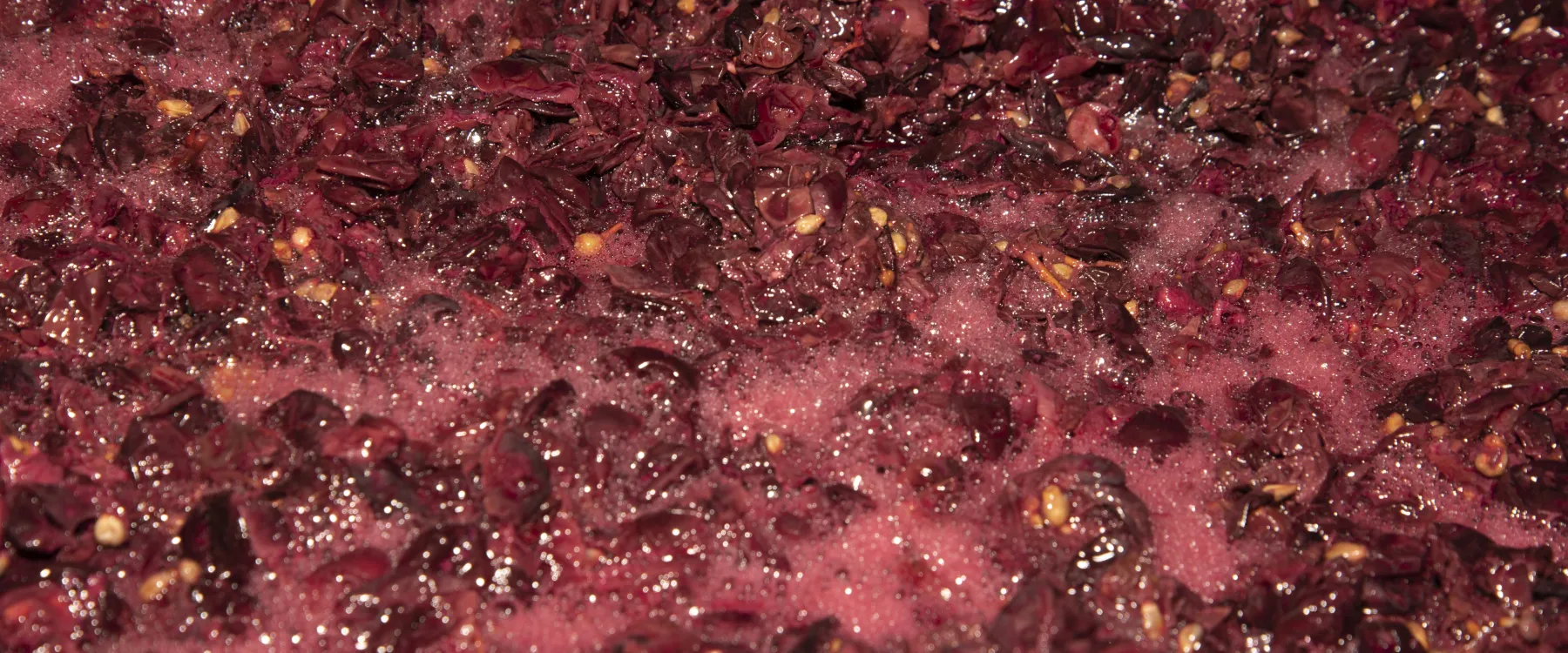
At the Bartolo Mascarello winery in the heart of Barolo, Nebbiolo grapes remain immersed in the must for forty-eight days. An eternity by contemporary oenological standards. Maria Teresa Mascarello, who inherited the legacy of her father who died in 2005, continues to ferment in cement vats without temperature control, to macerate using the submerged cap method, to age in large untoasted Slavonian oak casks. It's a ritual unchanged for over a century, producing wines that need decades to express their full potential. Wines in which tannins are not a flaw to be softened, but the very substance of passing time.
But what exactly are these compounds that can make the difference between a forgettable wine and one that can traverse the decades? The answer begins with a molecule roughly resembling a hexagon: phenol. From this basic building block, vines construct increasingly complex molecular chains—polyphenols—among which tannins hold pride of place. The name itself betrays an origin that has nothing to do with winemaking: it derives from the Old German tan, meaning oak, and refers to the use of bark for tanning hides. That process of transforming raw hide into leather relies on the same chemical reaction that occurs in our mouths when we drink a tannic wine: the molecules bind to proteins, precipitate them, make them aggregate.
In the mouth, the designated victims are salivary proteins. Particularly those rich in proline, which constitute over seventy per cent of proteins in stimulated saliva. When tannin encounters them, molecular complexes form and precipitate, stripping saliva of its lubricating function. This explains that sensation of dryness, that astringency that seems to contract the gums and pull at the cheeks. It's not a taste but a tactile sensation: tannins speak to us through our skin.
The grape conceals its tannins in three distinct fortresses. The skins guard them in their outer layers, alongside the pigments that give wine its colour. The seeds are particularly rich in them, protected by a waxy coating that alcohol must dissolve before extraction can occur. The stems contribute a smaller but nonetheless significant portion of the total tannin profile. Each of these sources yields tannins with different characteristics: those from skins tend to be softer, those from seeds more bitter and astringent, those from stems greener and more vegetal.
Maceration is the moment when the winemaker decides how much tannin to extract and from where. It's a question of time, temperature and contact. A rosé might sit on skins for mere hours, capturing just a veil of colour. A great traditional Barolo might macerate for a month or more. Temperature plays its part: cold slows extraction, heat accelerates it. The alcohol forming during fermentation progressively dissolves the lipids protecting the seeds, releasing harder tannins towards the end of the process. This is why some modern Barolo cellars, limit skin contact to ten or fifteen days: they seek structure and fruit intensity without the late-extraction bitterness of the pips.
But grape tannins are only half the story. The other half is written in cellars where oak wood adds its voice to the molecular chorus. Oak ellagitannins are chemically different from the grape's condensed tannins: smaller, more easily hydrolysable, capable of releasing sugars when they degrade. Vescalagin and castalagin are the names of the main ellagitannins that migrate from wood to wine, bringing notes of vanilla, spice and toasted nuances. French oak contains more of these than American oak, which instead abounds in lactones responsible for more pronounced coconut and vanilla notes.
A new barrique releases most of its aromatic compounds to the wine in the first months of contact. Then, over time, the wood becomes exhausted. After four or five fills, it becomes what oenologists call "neutral wood": a vessel that permits slow oxygenation without adding flavours. It's in these large containers that Barolo traditionalists like Giacomo Conterno, Bruno Giacosa and Giuseppe Rinaldi leave their wines to rest for three, four, even five years. Casks of twenty-five, fifty, even a hundred hectolitres, built from untoasted Slavonian oak: the antithesis of the 225-litre French barrique that conquered the world in the 1980s.
That was the era of the "Barolo Boys", when a generation of young producers led by figures like Elio Altare and Domenico Clerico decided it was time to make wines drinkable without waiting half a century. Short macerations, new barriques, fruitier and more accessible wines. The traditionalists' response was eloquent in its silence: Bartolo Mascarello continued to do exactly what he had always done. His hand-drawn labels bearing slogans like "No barrique, no Berlusconi" became symbols of cultural resistance before they were oenological.
Time, however, has revealed that this was never about winners and losers. Tannins, when well extracted and from ripe grapes, need no masking. Over the years they aggregate into ever-longer chains, precipitate to the bottom of the bottle, soften. The Barolo that bit your tongue when you were twenty years old caresses you at forty. This is the tannin paradox: the more there is at the start, the more the wine can improve over time. But the condition is that they must be "ripe" tannins, extracted from skins and seeds that have completed their vegetative cycle. Green tannins—those from grapes harvested too early or insufficiently lignified stems—remain bitter forever.
Today we know that the perception of astringency depends not only on the quantity of tannins but also on their molecular structure, their degree of polymerisation, the presence of other substances in the wine. Acidity accentuates astringency, alcohol attenuates it. Residual sugars mask it, polysaccharides soften it. It's a delicate balance that great winemakers try to orchestrate vintage after vintage.
Perhaps this is why tannin remains, despite all the science surrounding it, a mysterious substance. Chemists can measure its concentration, but they still cannot predict with certainty how it will be perceived in the mouth. Producers can control its extraction, but cannot know how it will evolve in bottle over ten or twenty years. It is the invisible backbone of wine—one you cannot see but can feel. The element that transforms fermented grape juice into something worth waiting for.